
























Featuring

Prithvi Shankar
Project Manager, MariApps

Toju P Thomas
Senior Manager, MariApps
Modern vessels generate enormous amounts of operational vessel data every day — from navigation systems and machine to fuel meters, noon reports, and maintenance logs. Yet, in most fleets, this data lives in silos: different systems, formats, and teams. The result is that the picture of what is happening across a maritime fleet is always incomplete, always assembled manually, and always arriving too late.
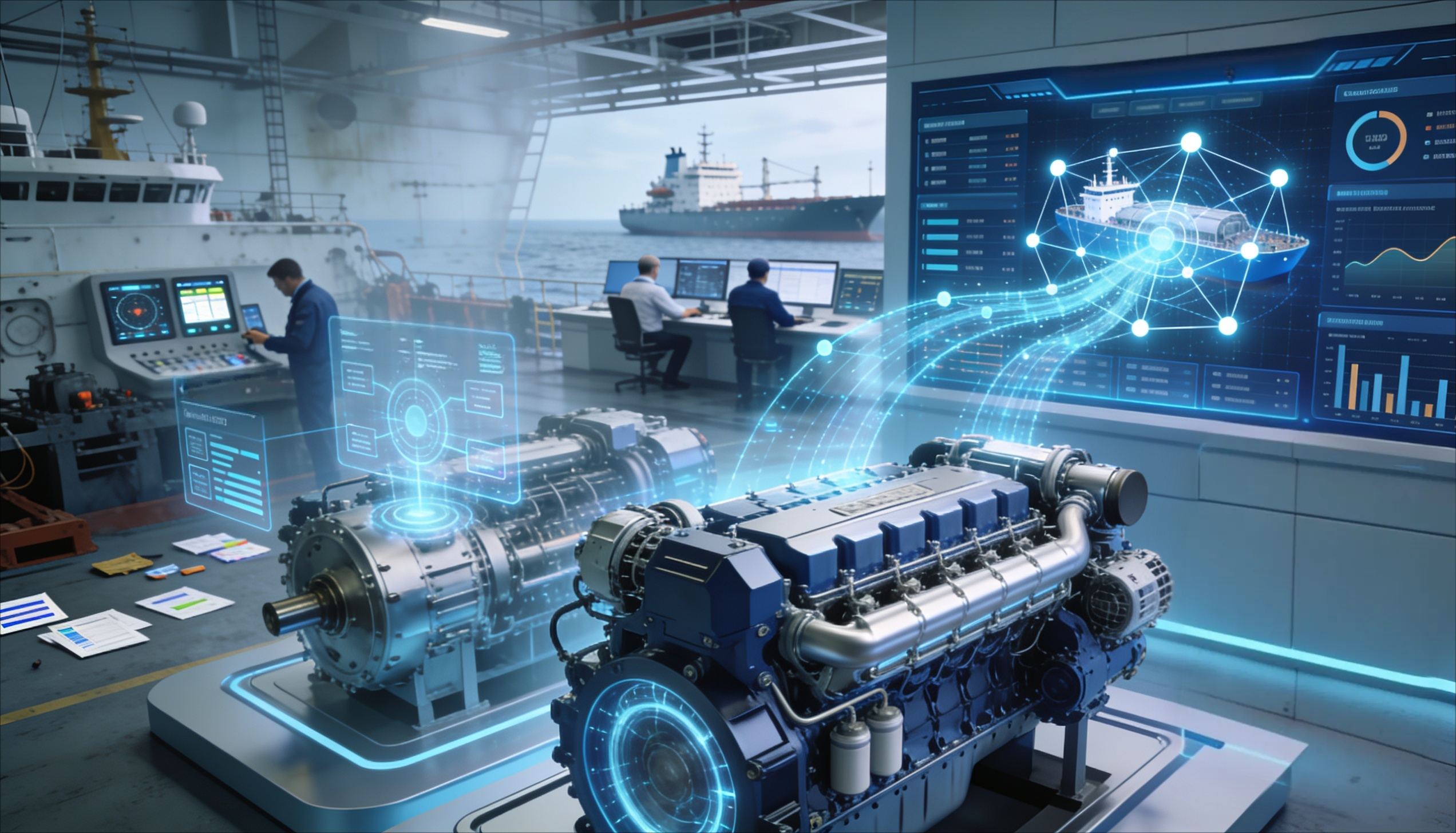
FleetPulse acts as a fleet intelligence layer that sits above all of these systems, pulling their signals together and converting them into a coherent operational intelligence picture — one that every team can use and one that the data itself is constantly updating.
Data Connectivity
Every Signal, From Every System
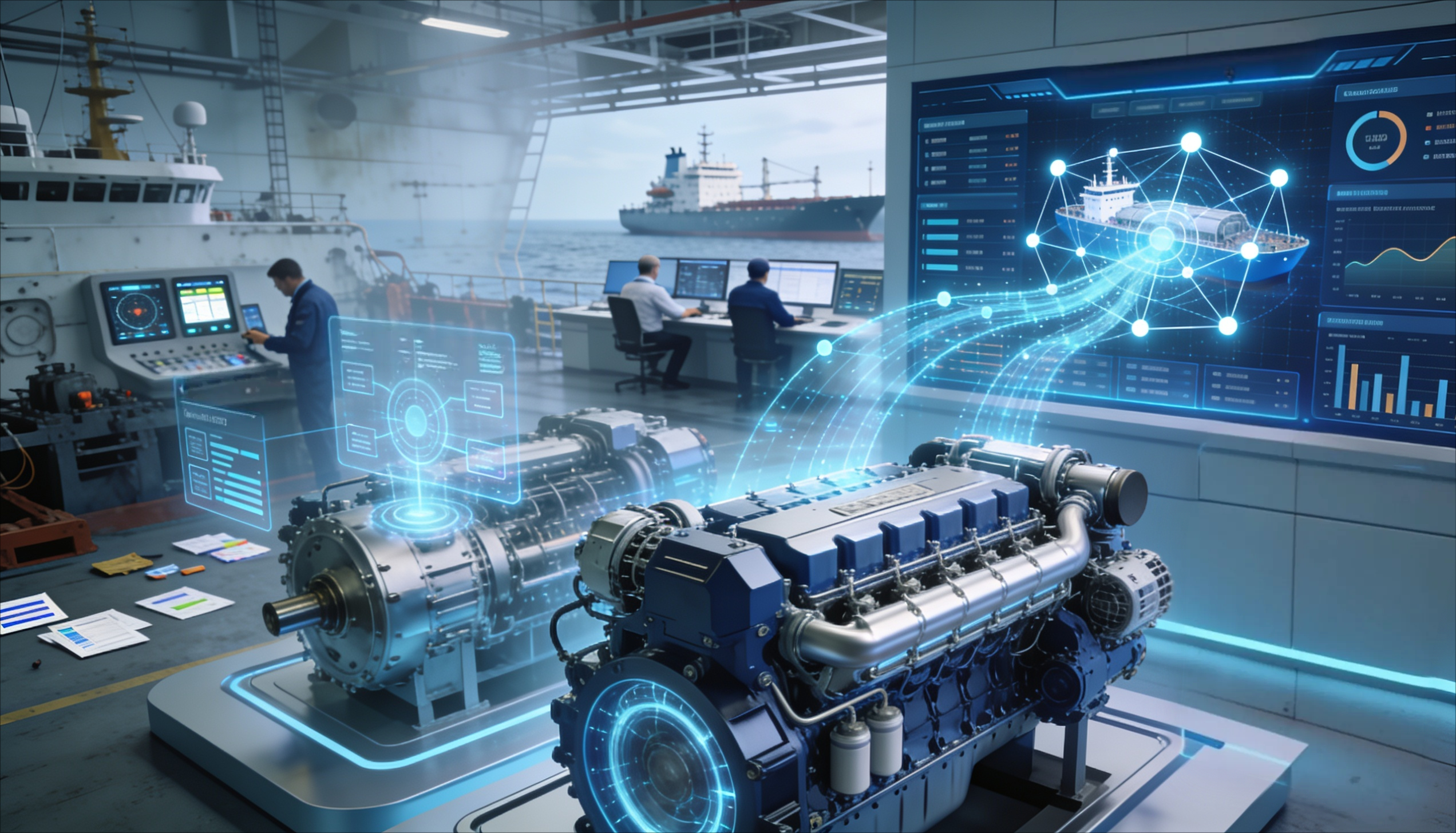
FleetPulse connects onboard instrumentation, machinery systems, and operational records into a unified maritime intelligence layer accessible from shore.
FleetPulse connects to the full range of onboard and shore-side systems, aggregating data that was previously impossible to view together. The six categories of data it draws from span the complete operational scope of a vessel:
Fleet Overview
The Fleet Picture, Without the Manual Assembly
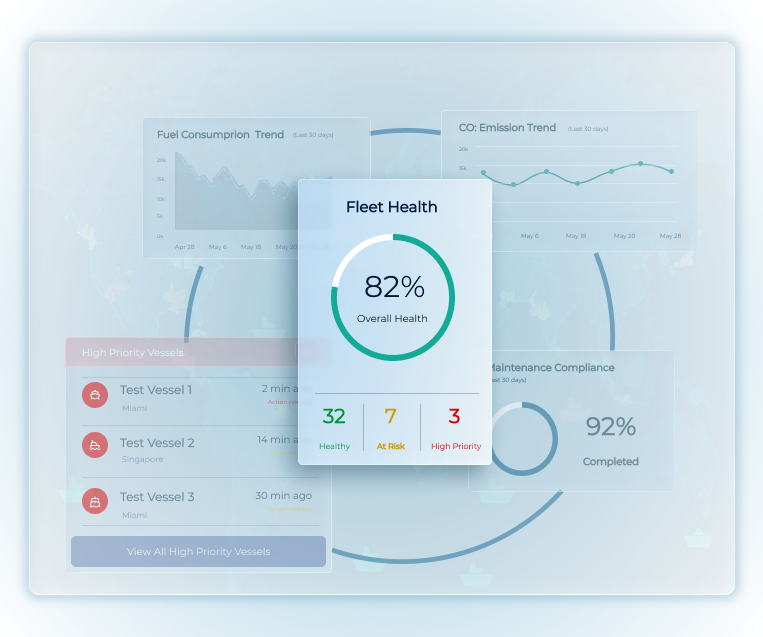
Fleet Health Dashboard: overall condition scoring, maintenance compliance rates, high-priority vessel alerts, and fuel and CO₂ emission trends — surfaced automatically.
The fleet-level view consolidates vessel condition, alerts, risk indicators, and focus vessels into a single operational picture. What previously required pulling data from multiple modules is surfaced automatically — with the vessels requiring immediate attention identified and prioritized, alongside fleet-wide trends in fuel consumption and emissions that inform both day-to-day decisions and longer-term planning.
Vessel Intelligence
Every Vessel, in Full Detail
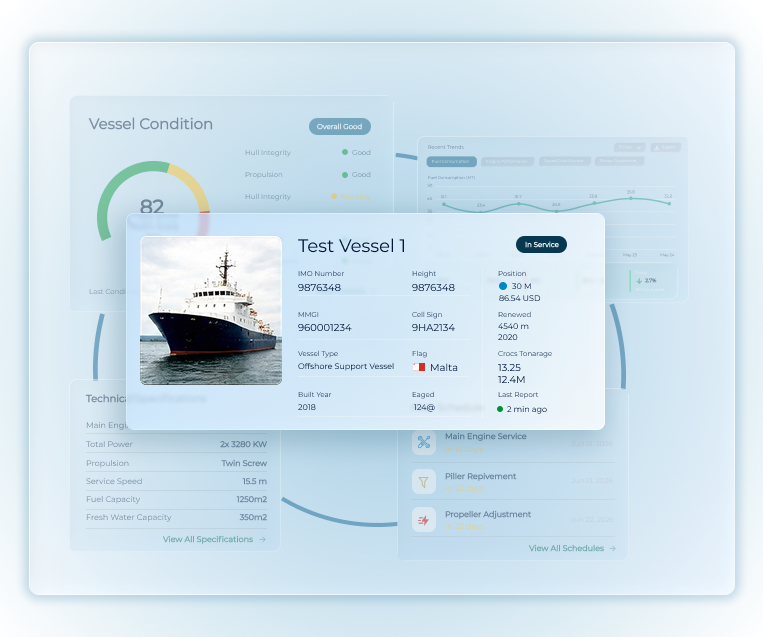
Vessel Drill-Down: hull integrity and propulsion condition scoring, technical specifications, and upcoming maintenance schedules in a single consolidated view.
Drilling into an individual vessel surfaces its full operational picture — condition scoring across hull integrity and propulsion, vessel-level specifications, flag state, last report timestamp, and upcoming maintenance schedules. The depth of detail available at the vessel level is what enables the fleet-level view to be trusted: every number in the aggregate is traceable to a specific vessel, reading, and time.
Pattern Intelligence
Exceptions Surfaced Before They Become Failures
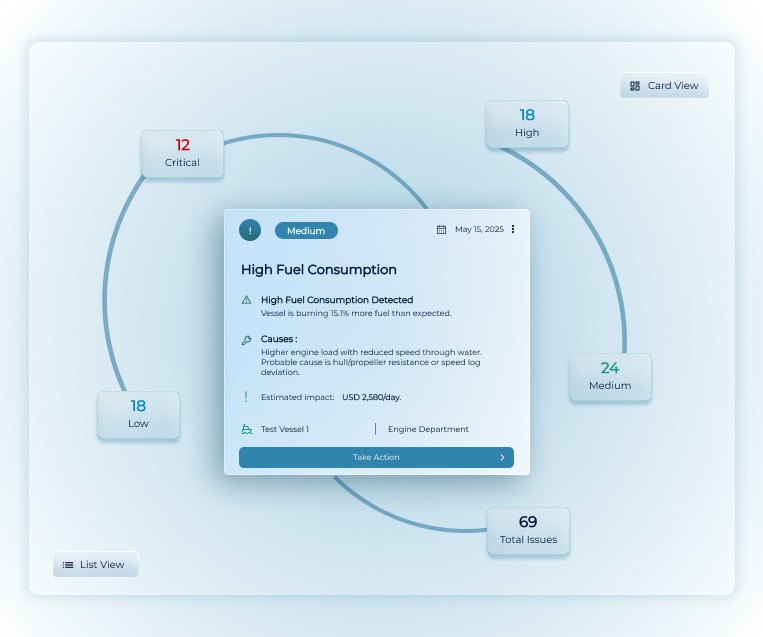
Action Card View: issues classified by criticality — Critical, High, Medium, Low — with root cause analysis and estimated financial impact per issue.
A single alarm may appear insignificant. A single fuel deviation might be overlooked. But when similar signals appear repeatedly — or cluster with other abnormal conditions — FleetPulse surfaces them as actionable intelligence. The pattern recognition capability monitors for repeated machinery alarms across time or voyages, abnormal fuel or performance trends, sensor mismatches and data inconsistencies, vessel-to-vessel deviations across the fleet, risk build-up across multiple operational areas, and early warning signs before failure occurs.
The Action Card view classifies issues by severity with root cause analysis and estimated financial impact. A vessel burning above expected fuel consumption levels does not sit in a report waiting to be read — it becomes a prioritized alert, attributed to probable cause, quantified in daily cost terms, and routed to the responsible department.
”A single alarm may look insignificant. But when similar signals appear repeatedly — or cluster with other abnormal conditions — FleetPulse surfaces them as actionable intelligence.
Prithvi Shankar - Project Manager
User Roles
Built for Every Team That Runs a Fleet
FleetPulse is not a single-department tool. It serves five distinct roles, each with a tailored view of the same underlying data:
- Master / OfficerVoyage movement, speed, heading, route behaviour, and navigational patterns.
- Chief EngineerMachinery monitoring, alarm review, fuel trend analysis, and faster troubleshooting.
- SuperintendentFleet-level vessel condition, alerts, risk indicators, and focus vessel identification.
- Technical ManagerEvidence-based for guarantee, warranty, and performance review periods.
- Fleet ManagerAsset-wide visibility and identification of vessels that need attention.

Every Vessel Deserves a Digital Operational Pulse
Scattered data, unified. Scattered teams, aligned. One intelligence layer for the entire fleet.